Antifragility and complexity 

“The entire idea of via negativa is omission does not have side effects and the branching chain of unintended consequences” -Nassim Taleb
While I didn’t used to understand antifragility besides the superficiality, now it is clear to me that what Taleb calls antifragility is the same idea of Chris Langton calls the edge of chaos. Complexity lies in the edge of chaos. Antifragility is the system’s ability to walk the tight rope along the edge of chaos towards increasing complexity. Thus Antifragility is an aggregate or systemic characteristic. In a complex system the occasional minor shocks introduce changes into the system much like random mutations do in biology. These minor shocks are what allows natural selection to weed out the fragile in any system. As a result the aggregate becomes better. Natural selection does not work to add antifragile or even robust individuals into the system , but rather work to remove the fragile from the system. In the western world, we love to add but rarely do we subtract. If there is a problem, we add something to fix it instead of getting rid of the problem in of itself. We build fragile skyscrapers and add reinforcements to prevent collapse. We eat ourselves sick and add a pill to bring us back to health. We created a financial mess by blindly wielding convoluted derivatives, then tried to fix this mess by adding the onerous Dodd Frank Act, and now we are trying to add more legislature to repeal it. Much of history has been spent on fixing things that shouldn’t have been necessary to be fixed in the first place. The ultimate result is that the entire system becomes more fragile because with every addition comes many higher order consequences. The classics (Heraclitus, Seneca, but NEVER Plato) and the various eastern (Buddhism, Taoism etc) and western philosophies (stoicism, nihilism, certain parts of Christianity, etc) have all stressed the importance of either removing (via negativa) worldly desires completely, or accepting (not adding to) the workings of the world. Observe how the world works, and increase our optionality so we are able to react to it if good fortune were to grace us. 

It’s time we realize that one can do much more good by removing evil. Via negative is essentially the hippocratic oath of life. Whatever we choose to do in the world, primum non nocere
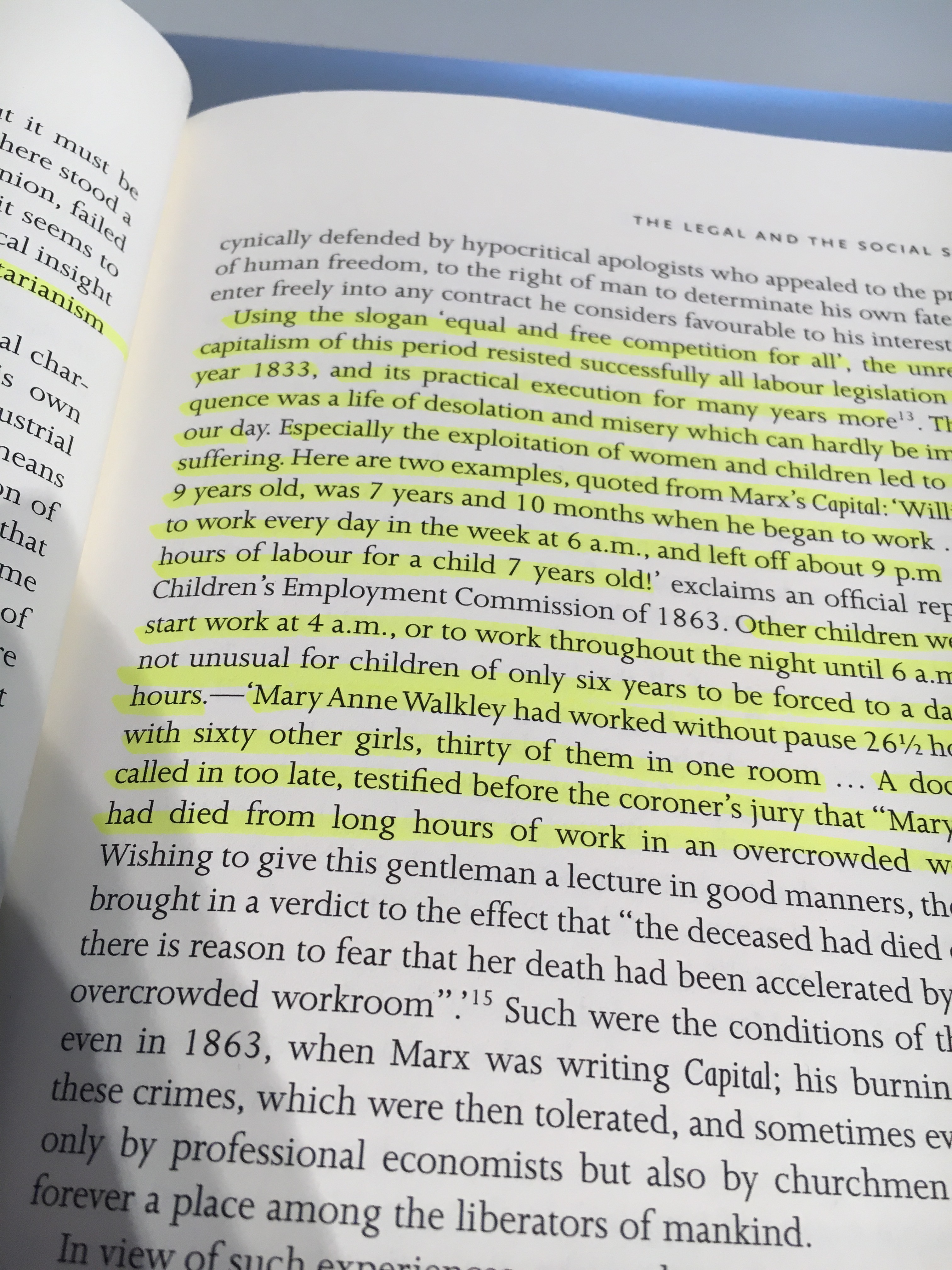
Cruel life


Karl Popper: The Open Society and its Enemies.

What Mises, Friedman and other liberal free market advocates will rightly respond is that these children would otherwise been in worse situations or not have been born at all because their parents wouldn’t have had the ability to even nurture them to their age. However it is not arguable that a truly unrestrained free market system at its very inception in the 1800s created a system of rampant and vile exploitation of the workers. The market eventually rights itself, as Mises noted in Human Action, and working conditions eventually do improve as the standard of living enriches through the very capitalistic “exploitations” themselves. But those caught in the initial toils would never be able to recover anything for their sacrifices. Their toils have been put into the system and they will never taste the rewards of their cruel labor. Such is the cruelties of life. It is life that show disdain for humanity and equality. Marx is right to say that a system is fundamentally above the individual, but the systemic exploitation is not from the bourgeoise but rather the conditions of life. The true exploiter of human being and the source of all miseries is life itself. Life is not beautiful. Life is miserable. It is the fact that all inputs into the system must be guaranteed and “prepaid” and all outputs from life is on purely speculative grounds that causes many issues of the “class struggle”. The bourgeoisie advanced to where they were due to the risks they took and the failures that others similar to them suffered. They exploited the proletarian because of self preservation, and the old adage that if they don’t do it, somebody else will. The reason the bourgeoisies claims ownership to all of their returns is because they have equally “paid” to life just as the proletarians have, only they have paid partly in risks rather than pure work.  In their minds, they have also paid much toils, and deserves much spoils. Therefore the ultimate source of this cruel system is very much life itself. The system is not a conspiracy created to benefit any single individual or groups. The system is impartially cruel to all, nobody is exploiting others without being exploited themselves. It might have been the greatest philosophical insight when Sophocles uttered that maybe the greatest boon is to have never been born at all.